

For many first-time visitors, Bath means one thing: the Roman Baths. They are certainly worth the journey, but leaving immediately afterwards would mean missing much of what makes the city special.
Within a relatively compact centre, you can move from Roman Britain to a medieval abbey, cross one of England’s most distinctive bridges and walk through streets that transformed Bath into a fashionable Georgian spa town.
There are literary connections, riverside views and, if your feet have had enough by late afternoon, the chance to experience Bath’s thermal waters for yourself.
So, once you’ve seen the Roman Baths, what should you do with the rest of your day?
(We hope the following blog provides plenty of inspiration for your own travels. Do be sure to explore our Bespoke Day Tours in England.)
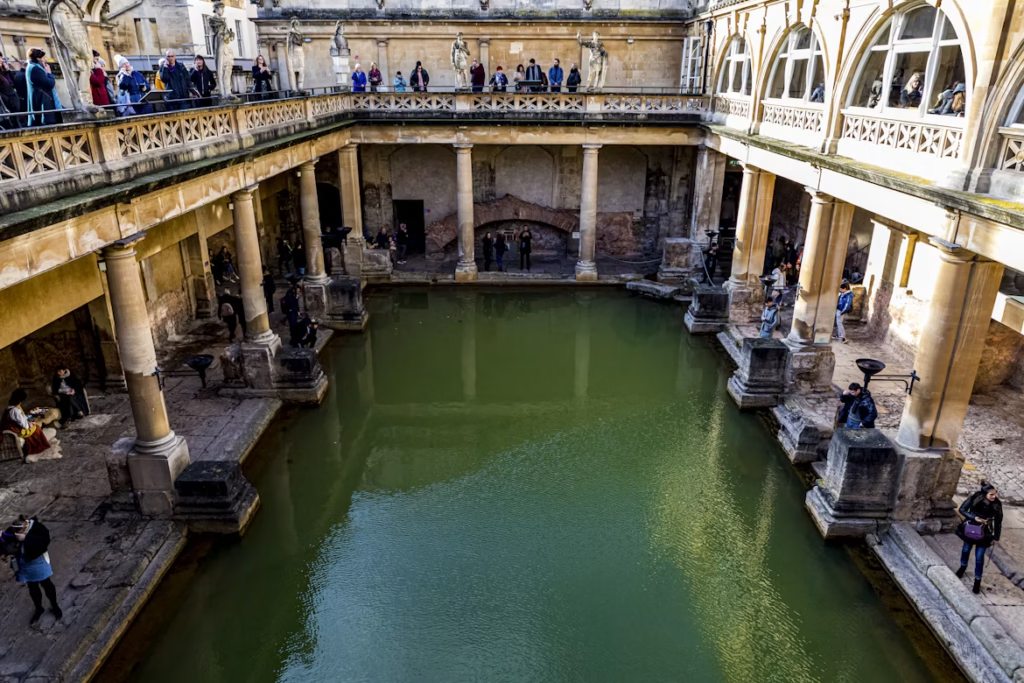
Start Your Day at the Roman Baths
It makes sense to begin at the attraction that put Bath on the map nearly 2,000 years ago.
The Romans knew the settlement as Aquae Sulis, developing a religious and bathing complex around the area’s natural hot springs. Today, the Roman Baths preserve the Great Bath, temple remains and thousands of archaeological finds from the site.
Give yourself time to see it properly, but don’t let the Roman period dominate your entire day. Bath’s importance continued long after the Romans left, and the city you see above ground owes just as much to its medieval and Georgian history.
Conveniently, your next stop is only a few steps away.
Step Inside Bath Abbey
Standing beside the Roman Baths, Bath Abbey makes the transition between different periods of the city’s history remarkably easy.
Christian worship has taken place on the site for more than a thousand years, although much of the present building dates to the late medieval period and later restoration. Inside, look up at the Abbey’s striking fan-vaulted ceiling before exploring the memorials, stained glass and Discovery Museum.
If time allows, consider a Tower Tour. The climb takes you behind the scenes and, at the top, above the city with views across Bath. Tours are subject to availability, so check the Abbey’s current visiting information when planning your day.
Bath Abbey remains an active church rather than simply a historic attraction, meaning access can occasionally change for services and special events.
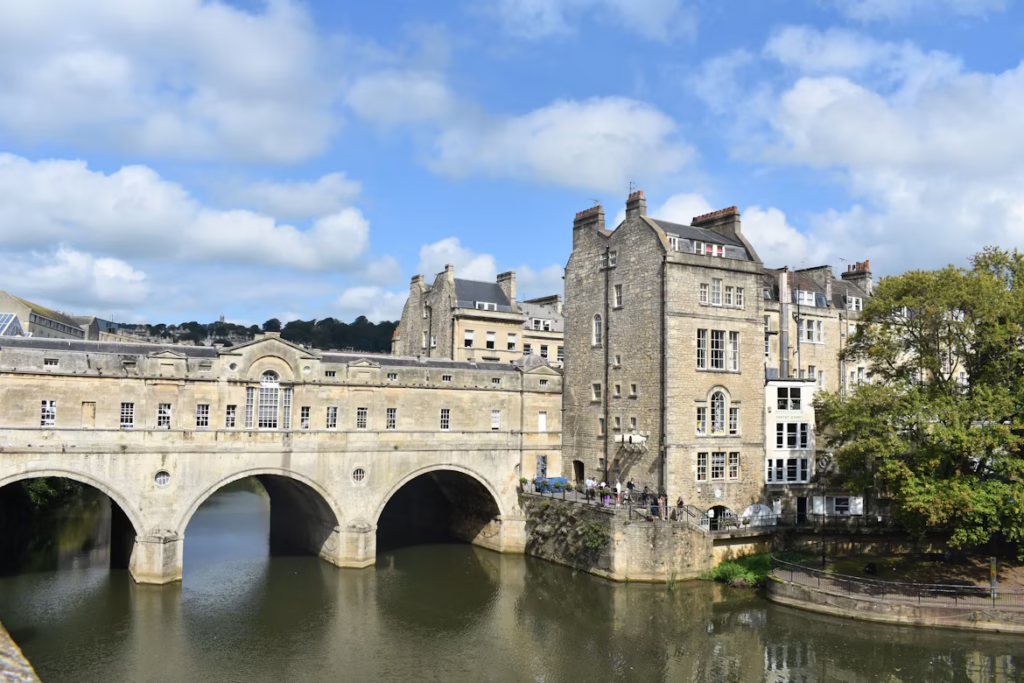
Walk to Pulteney Bridge and the River Avon
From the Abbey, walk towards the River Avon and Pulteney Bridge.
Completed in the 18th century, the bridge is unusual because shops were built across it. From river level, the bridge, horseshoe-shaped weir and Georgian buildings behind it create one of Bath’s most familiar views.
It’s worth crossing rather than simply taking a photograph. Continue onto Great Pulteney Street and you’ll get another sense of the scale and ambition of Georgian Bath.
Alternatively, follow the river for a while before turning back towards the historic centre. After a morning spent in museums and churches, this is a good time of day to walk.
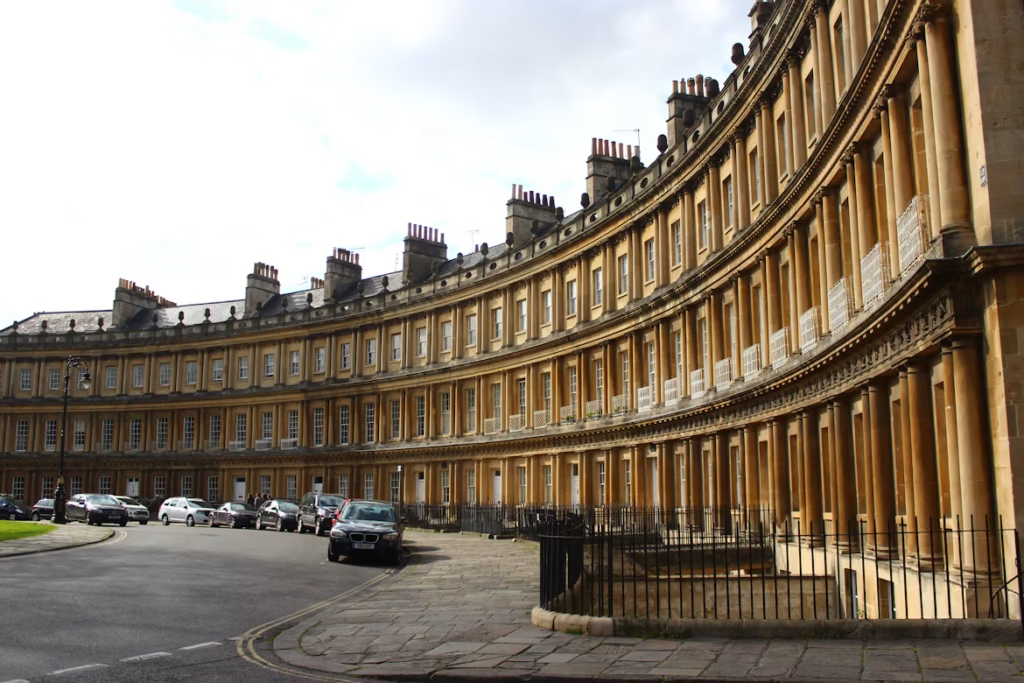
Explore Georgian Bath: The Circus and Royal Crescent
The Romans gave Bath its springs, but the Georgians created much of the city visitors recognise today.
During the 18th century, Bath became one of Britain’s most fashionable spa resorts. Wealthy visitors came to bathe, socialise and be seen, and ambitious new terraces, squares and public buildings followed.
That Georgian town planning is one reason the City of Bath is recognised as a UNESCO World Heritage Site.
A good walking route takes you through Queen Square before continuing to The Circus, designed by John Wood the Elder. From there, follow Brock Street towards the Royal Crescent, completed to the design of his son, John Wood the Younger.
The buildings are impressive individually, but the real pleasure comes from seeing how the streets, crescents and squares work together. You don’t need a ticket to appreciate Georgian Bath.
If you’d like to see behind one of those famous façades, No. 1 Royal Crescent recreates a fashionable Georgian townhouse and gives a much clearer idea of how Bath’s wealthier residents lived.
Follow Jane Austen Through Bath
By the time Jane Austen moved to Bath in 1801, the city was already well established as a centre for fashionable society. Her relationship with Bath was complicated, but the years she spent here left their mark on her fiction.
Both Northanger Abbey and Persuasion feature Bath prominently, drawing on the city’s social rituals, Assembly Rooms, walks, and endless opportunities to observe other people.
Fans can visit the Jane Austen Centre, but you don’t need to devote hours to an attraction to follow her connection with the city. Walking through the Georgian streets around the Assembly Rooms, Queen Square and the Gravel Walk already puts you among places associated with Austen’s Bath.
The Gravel Walk also works well with this itinerary, running close to the Royal Crescent and letting you keep exploring without retracing your steps.
Make Time for Lunch
It can be tempting to squeeze every Bath attraction into a single day. Resist the urge.
The historic centre has plenty of pubs, cafés, tearooms and restaurants, so allow time for lunch rather than eating while walking between sights. One well-known option is Sally Lunn’s Historic Eating House, associated with the Bath bun that bears Sally Lunn’s name.
You don’t need a complicated lunch itinerary. An hour off your feet will probably make the second half of the day considerably more enjoyable.
Finish With a Bath of Your Own
There is a satisfying way to bring the day full circle.
You started by looking at the pools where Romans bathed nearly two millennia ago. At Thermae Bath Spa, you can get into Bath’s naturally warm, mineral-rich water yourself.
The spa uses water from the city’s thermal springs and includes indoor facilities alongside its rooftop pool. From the roof, you can look across the surrounding city while sitting in the same thermal water that has shaped Bath’s history.
You’ll need considerably more time for this than for a quick sightseeing stop, so it won’t suit every one-day itinerary. If you’d rather keep exploring, use the late afternoon for another walk through the centre or a final look along the Avon.
Can You Visit Bath From London in One Day?
Yes. Bath is a popular day-trip destination from London, although how you organise the journey affects what you can comfortably fit into the day.
It also combines particularly well with other destinations west of London. Stonehenge lies along the broader route towards Bath, while Oxford and the Cotswolds can form part of a longer journey through southern England.
This is where a private tour becomes particularly useful. Instead of organising separate trains, buses and transfers — or repeatedly returning to London — you can move directly between destinations with your luggage travelling with you.
Bespoke England Tours includes Bath in its private multi-day tours of England, allowing visitors to see the city as part of a wider route rather than as an isolated excursion.
See Bath as Part of a Private England Tour
For visitors with several days available, Bath fits naturally into a journey through southern England.
Our private multi-day tours can combine Bath with destinations including Stonehenge, the Cotswolds, Oxford and Windsor, with private Mercedes transport and an itinerary planned around your interests.
Travelling privately also gives you more control over your time in Bath. If Roman history is your priority, you can give the Baths longer. Jane Austen enthusiasts may prefer to spend more of the afternoon exploring Georgian Bath, while others might want time at Thermae Bath Spa before continuing their journey.
For a longer trip around Britain, Bath also features in our Seven Days: Highlights of Great Britain tour, which connects the city with destinations across England, Wales and Scotland.
One Day in Bath: Look Beyond the Baths
The Roman Baths may be the reason you first put Bath on your itinerary, but they tell only the earliest part of the city’s story.
Step outside and centuries of history sit within walking distance. Bath Abbey introduces medieval Bath; the Circus and Royal Crescent reveal the fashionable Georgian city; Jane Austen offers another way to understand the society that gathered here.
That compactness makes Bath a rewarding place to spend a day. You don’t need to race between attractions. Give yourself time to walk, look up and see how the different versions of Bath fit together.
